Game Breakdown
Why ARC Raiders’ Sound Design Works Because It Sounds “Bad” — A Deep Dive
Why the rough, imperfect audio in ARC Raiders works better than polished shooter sound, and what that means for players and designers.
At first glance, the idea sounds almost wrong.
“ARC Raiders sounds this good because it sounds… bad” presents a counter-intuitive argument: the audio in ARC Raiders feels exceptional precisely because it avoids the polished, hyper-precise sound design we associate with competitive shooters. Instead of clean clarity, the game embraces roughness, noise, and ambiguity — and that choice is exactly what makes it work.
In most multiplayer shooters, sound is engineered for precision. Footsteps are tuned so players can pinpoint enemies from across the map. Gunshots are clean and readable, instantly communicating distance, direction, and threat level. Audio becomes a tactical advantage — almost a secondary HUD.
ARC Raiders chooses a very different path.
Rather than crisp competitive audio, its soundscape feels aesthetic, atmospheric, and intentionally imperfect. The result is an experience that prioritizes mood and immersion over information.
Sound Design That Prioritizes Atmosphere Over Precision
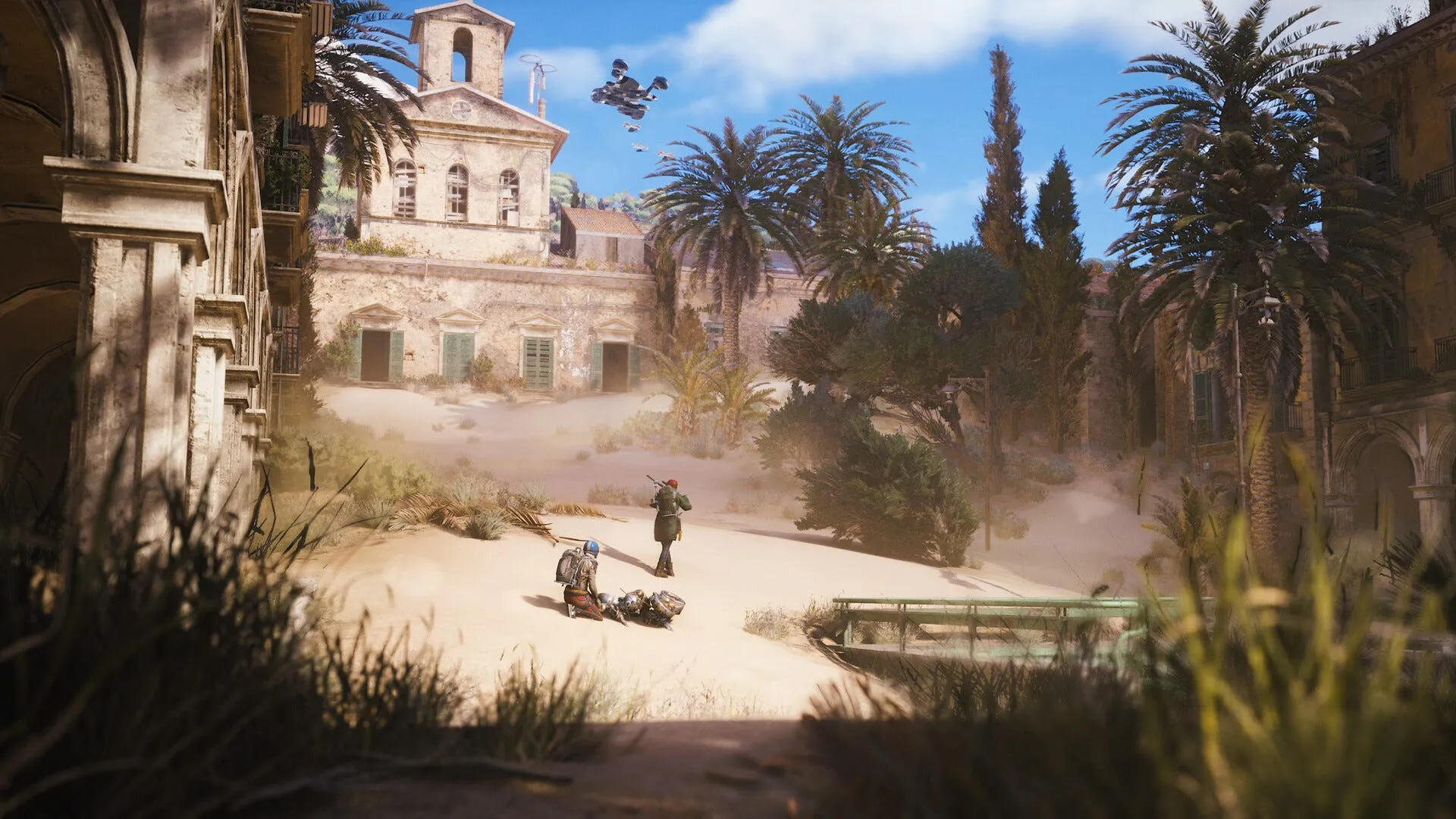
ARC Raiders isn’t just another PvP shooter. It’s a third-person PvPvE extraction game set in a hostile, ruined future Earth. Players fight mechanical enemies, navigate dangerous environments, and clash with other squads — all while trying to extract safely with their loot.
That world is tense, unstable, and unpredictable, and the audio reflects that identity.
Unlike shooters that chase absolute audio clarity for balance, ARC Raiders leans into a messy, cinematic soundscape:
- Explosions hit with heavy distortion and lingering low frequencies, overwhelming the mix rather than resolving cleanly.
- Ambient drones, wind, and environmental noise blend together, making the world feel alive and constantly active.
- Footsteps and distant cues are sometimes vague, trading tactical certainty for tension and unease.
This kind of sound design doesn’t guarantee you’ll hear the enemy first. What it guarantees instead is that every moment inside a raid feels cinematic, oppressive, and immersive.
That’s the core argument of the video: the sound feels good because it isn’t engineered to be clean, minimal, or perfectly readable.
Community Reactions: Style vs. Function
Naturally, this approach has sparked debate within the ARC Raiders community.
Some players praise the audio for the way it enhances immersion. They describe environments that feel alive and threatening, where sound reinforces the fantasy of being small and vulnerable in a dangerous world rather than empowered and in control.
Others take a more competitive view. From that perspective, the audio can feel less informative than in traditional PvP shooters. Directional cues aren’t always precise, and sound alone can’t always be relied on for decision-making.
This split reaction perfectly reflects the heart of the video’s thesis.
The audio in ARC Raiders was not designed primarily as competitive feedback. It was designed as art.
Instead of perfectly readable footsteps and clean callouts, players get a layered, textured soundscape that makes every encounter feel like part of a living, breathing world — even if that comes at the cost of mechanical clarity.
What This Means for Players and Designers
For Players
For players used to competitive shooters, ARC Raiders’ audio can initially feel “wrong.” It doesn’t behave like a tactical tool you can master and exploit. But for many, that’s exactly what makes it special.
The game doesn’t sound like a system to be solved.
It sounds like a place you’ve stepped into.
And that makes surviving each raid feel memorable rather than procedural.
For Game Designers
For designers, ARC Raiders is a powerful reminder that sound design is about experience, not just utility.
Clear audio supports skill expression and fairness — but it can also make players feel safe and in control. ARC Raiders intentionally avoids that comfort. By prioritizing emotion, scale, and atmosphere, it creates a more cinematic and psychologically tense experience, even if it sacrifices some competitive readability along the way.
Conclusion
Saying that ARC Raiders “sounds good because it sounds bad” isn’t an insult — it’s an insight.
By leaning into texture, noise, and layered complexity, the game’s sound design reinforces its core fantasy: a dangerous world where information is imperfect and survival is never guaranteed. The result is a shooter that feels less like a competitive arena and more like a sensory journey through a hostile landscape.
ARC Raiders proves that sometimes, breaking the rules of “good” sound design is exactly what makes a game unforgettable.